

A couple of years ago, I did my twice-per-yearly blood test and saw that my cholesterol was high. This was befuddling: I’m an ascendant vegan being with no dietary source of cholesterol. But it seems like all that tahini and wine had gotten the best of me.
It was time to lose weight. Maybe 20 pounds. I looked to internet sages for advice. The prescription: calorie counting, weighing my food. Truly, life has no joy. But through searching for control and an easy way out amidst this horror, I stumbled on the work of Dr. Greger and his far-more-legit-than-it-sounds project: Nutritionfacts.org.
Dr. Greger had scoured the depths of academia to compile literature reviews putting together all current evidence on the most pressing issues of our times, and forged them into three books: How Not to Age, How Not to Die, and, most importantly for us, How Not to Diet. Throughout these books, there are a number of small effect size tweaks he mentions, but he comes to the same conclusion: plant-based food, not too much of it, and do some exercise. Good advice for sure, but I wanted the magic pill to rid myself of all ailments.
These books traverse the world of all the strategies, powders, pills, and potions that have been tried, and the evidence for them, from epidemiology to RCTs. Many of these are cheap spices. Inside you are two wolves, and one of them is Bryan Johnson. I needed to create my own totally-optimal blend.
Dr. Greger himself takes some spice powders. He’s been known to dose amla, nigella seeds, pippali, and turmeric. However, the method by which he takes them seems suboptimal. In order to get himself to ingest them, he recommends wrapping the doses in a potato starch wrapper that can slide down your gullet flavorlessly.
It occurred to me there must be a better way. For one, spices are delicious and should be treated that way. And secondly, if you’re wrapping them one by one, it limits how many spices you can add, making it incredibly laborious.
Enter my great innovation: mixing all the spices into one potent concoction, ideally in an old big Grillo’s pickles tub. To dose, I take one tablespoon, and mix it with one tablespoon of vinegar, another ingredient with very good evidence of weight loss efficacy (see below). Together, they make a kind of cursed hot sauce. People eventually caught wind of me covering my air-fried broccoli with this mix, or making a bewildering spice drink, and I would struggle to explain it was “for weight loss.” My girlfriend started referring to it as my “fat boy sauce.”
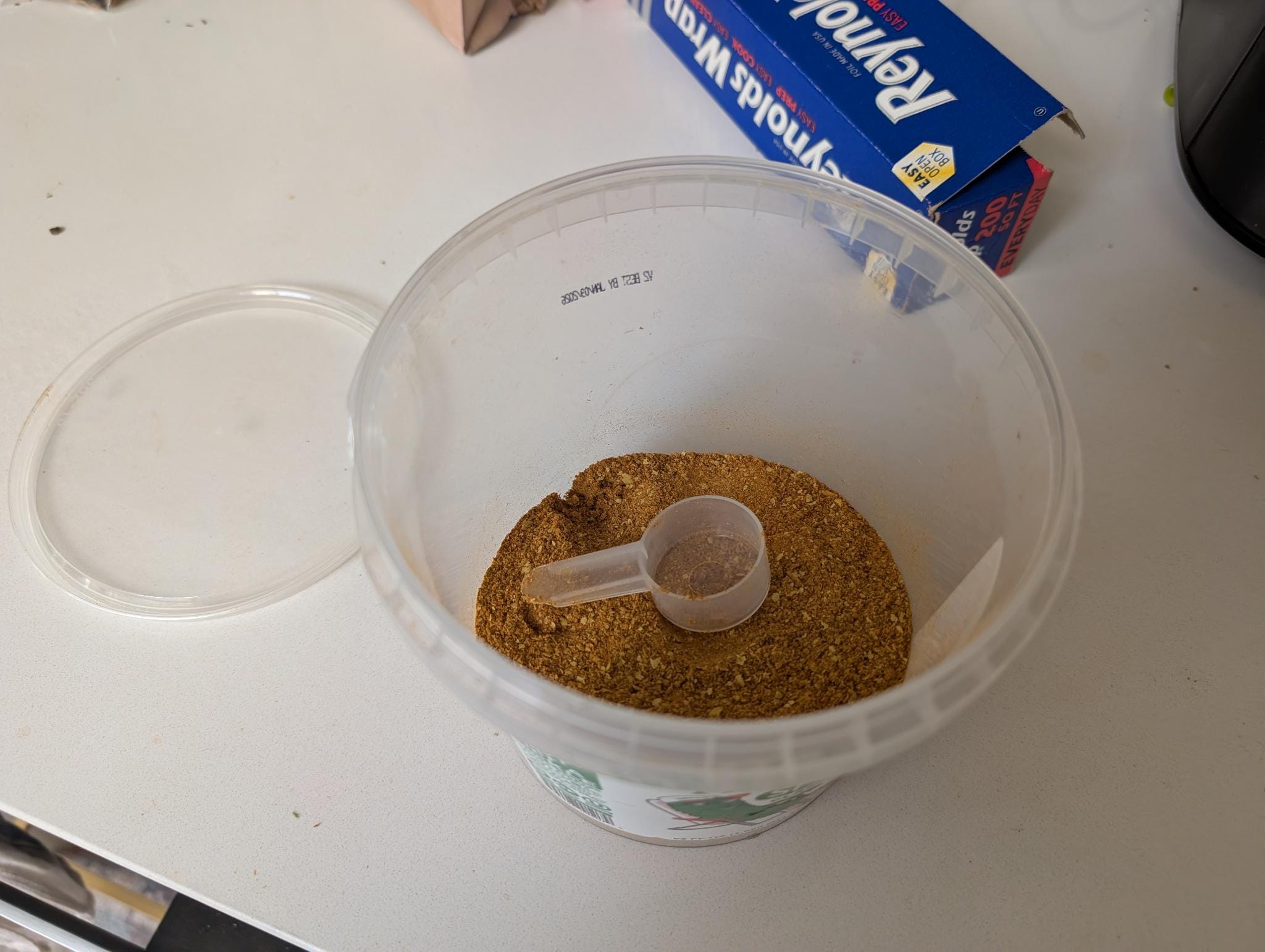
But here it is. From many researchers’ efforts to Dr. Greger’s amalgamation, to my brain and innovation, to you.
Recipe for Fat Boy Sauce
This recipe will provide the basis for a sauce for 24 days. Each day you consume 2 tablespoons.
Mix 1 tablespoon of spice mix with 1 tablespoon of apple cider vinegar. Mix with 1tsp of olive oil if not consuming with other fats (many spices have oil-soluble compounds).
Do this twice a day. Either use it as a sauce, a dressing, or add warm water to make a spiced vinegar tea.
I buy spices in bulk, and this ends up costing 33¢ per day.
Also, eat at least 2 tbsp of powdered flax seeds each day.
You might also want to include cocoa, fenugreek seed, cardamom, rosemary, and pippali powders. What I have already rounds out at a nice 2tbsp, so I wanted to limit it. But you can also add 0.7g of Saffron without adding significant volume. This adds an additional 27¢ per day, so almost as much as the rest but still not crazy.
Uses for Fat Boy Sauce
You gotta get it down twice a day.
Just mix it up (optionally with 5g olive oil) then you’ve got your dipping sauce.
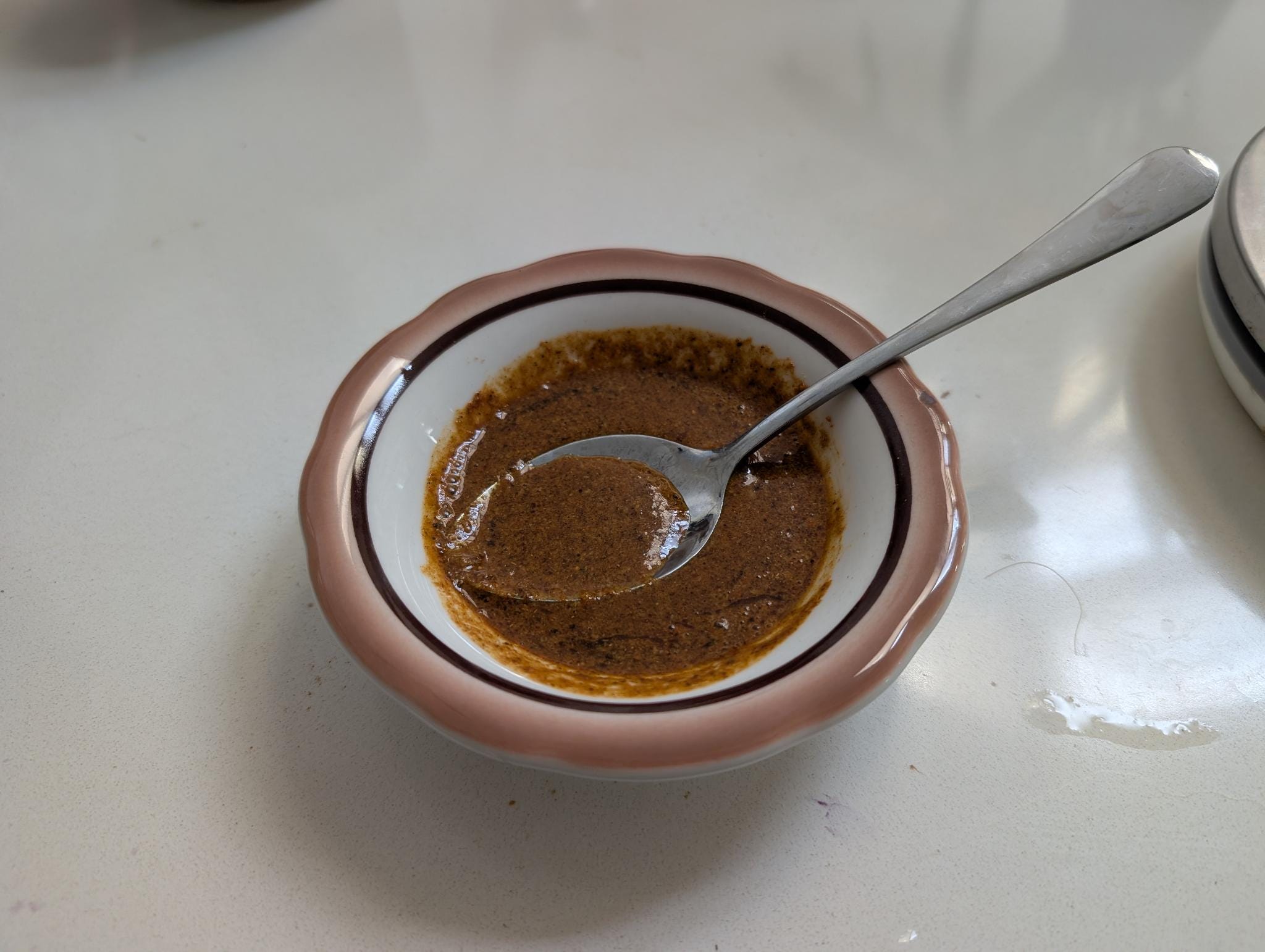
Add warm water to make it fat boy sauce tea.
Add olive oil, 2 tbsp of ground flax seeds, and water to make it into fat boy sauce nutty dressing. I use it to just dress some lettuce, it’s… interesting.
Air fry some broccoli and toss it in sauce for fbs buffalo (?) broccoli.
Heat up some edamame, mix it with extra nooch for fat boy sauce noochy edamame. Honestly my favorite one so far.
Please add in more suggestions in the comments.
Godspeed.
The Evidence
The Skinny
Vinegar: tricks your body into thinking you’ve exercised
Nooch: beta-glucan fiber reduces inflammation
Cumin: appetite suppressant
Ginger: triggers brown fat (fat-burning fat cells)
Cayenne: triggers brown fat and potentially creates more of it
Garlic: broadly anti-inflammatory, good metabolic effects
Black cumin: appetite suppressant, plus interesting anti-inflammatory properties
Ceylon Cinnamon: also triggers brown fat
Turmeric: not for weight loss, but very well-tested anti-inflammatory effects
Pepper: increases absorption of turmeric, and probably of other compounds
Amla: one of the highest-antioxidant foods that exists
Saffron: appetite suppressant. Also matched prescription drugs for Alzheimer’s and depression in trials
Core Spices
1. Nutritional Yeast — 2 tsp/day
Keep in mind that all studies here come from Big Nooch.
Mosikanon et al. (2017, double-blind RCT, n=44, 6 weeks) gave overweight/obese people yeast beta-glucan (477mg/day escalating to 954mg/day, ~2-4 tsp nutritional yeast equivalent) or placebo. The beta-glucan group lost about an inch off their waist over 6 weeks, and blood pressure and inflammatory markers improved. Santas et al. (2017, double-blind RCT, n=56, 12 weeks) gave overweight/obese people 3g/day of yeast beta-glucan (~4-6 tbsp nutritional yeast equivalent) or placebo. The supplement group lost about 4 lbs more than the placebo over 12 weeks. Talbott & Talbott (2009, double-blind RCT, n=75 marathon runners, 4 weeks post-race) found 250-500mg/day of yeast beta-glucan (~2-4 tsp nutritional yeast equivalent) halved the rate of upper respiratory infections vs placebo and improved mood.
Proposed mechanism: Beta-glucan fiber reduces chronic low-grade inflammation. Obesity creates a feedback loop where excess fat tissue produces inflammatory signals, which in turn promote further fat storage and insulin resistance. Breaking this cycle may allow the body to release stored fat more easily.
2. Cumin — 1 tsp/day
Zare et al. (2014, RCT, n=88, 3 months) gave overweight women calorie-restricted diets with or without ~1 tsp cumin powder in yogurt. The cumin group lost about 4 lbs more and an extra inch off their waist over 3 months. Taghizadeh et al. (2015, double-blind RCT, n=78, 8 weeks) found cumin capsules matched orlistat (a prescription weight-loss drug) for weight and BMI reduction over 8 weeks, and actually outperformed it on insulin metabolism. Beyond weight, cumin is rich in salicylic acid (a natural anti-inflammatory). The yogurt study probably wasn’t blinded (you can taste cumin), the capsule study used essential oil extract rather than whole cumin, and the Taghizadeh paper has received an expression of concern from the journal — but the direction is consistent across studies.
Proposed mechanism: Appetite suppression, though the specific pathway isn’t well understood. The salicylic acid content provides anti-inflammatory benefits similar to aspirin without the bleeding risk.
3. Ginger — 1 tsp/day (dried/ground)
A meta-analysis of 27 RCTs (Rafieipour et al., 2024, n=1,309) found ginger supplementation reduced body weight by 1.5 kg (~3.3 lbs), BMI by 0.6, and waist circumference by 1 cm over 8–12 weeks, with an optimal dose of 2g/day (~1 tsp). An earlier meta-analysis (Maharlouei et al., 2019, 14 RCTs, n=473) also found significant reductions in fasting glucose and insulin resistance. Mansour et al. (2012, crossover, n=10) found 1 tsp ginger powder at breakfast increased thermic effect by 43 kcal and reduced hunger. Brown adipose tissue (BAT) activation was confirmed with PET imaging using grains of paradise (same family): Sugita et al. (2013, crossover, n=19) showed increased brown fat energy expenditure after a single dose. Beyond weight, ginger matched ibuprofen for menstrual cramps (n=150), matched sumatriptan for migraines at just 1/8 tsp (n=100), and rivaled Dramamine for motion sickness. It also reduces inflammation, lowers blood sugar, and protects DNA. Dried outperforms fresh.
Proposed mechanism: Dried ginger activates brown fat (BAT) via TRPM8 — the cold-sensing receptor. Drying converts gingerols to shogaols, which are more potent at triggering this receptor. BAT burns stored fat to generate heat.
4. Cayenne (the hotter the better) — ½ tsp/day
A meta-analysis (Ludy, Moore & Mattes, 2012) found capsaicin boosts energy expenditure by roughly 50–70 cal/day at higher doses and suppresses appetite (the effect is smaller at culinary doses). Janssens et al. (2013, crossover, n=15, 36-hour respiration chamber sessions) found capsaicin largely counteracted the metabolic slowdown from calorie restriction — keeping metabolism close to full-calorie levels despite a 25% deficit. Nirengi et al. (2016, double-blind RCT, n=20, 8 weeks) showed daily capsinoids (non-pungent capsaicin analogs) increased brown fat density by 46% over 8 weeks, which partially reversed after stopping. A US cohort study (n=16,179) found 13% lower mortality in hot red chili pepper consumers, corroborating an earlier Chinese cohort that found a similar inverse relationship. Capsaicin also halved cluster headache attacks, improved irritable bowel syndrome (IBS) pain, and outperformed Propulsid for chronic indigestion. The metabolic boost is real but modest at food-level doses, and the longevity data is observational.
Proposed mechanism: Capsaicin activates TRPV1 — the heat receptor — triggering BAT. Unlike ginger (TRPM8/cold) and cinnamon (TRPA1), this is a different thermoreceptor, so all three could theoretically stack. Capsaicin also recruits new brown fat over weeks of consumption.
5. Garlic Powder — ¼ tsp/day
Soleimani et al. (2016, double-blind RCT, n=110, 15 weeks) gave non-alcoholic fatty liver disease (NAFLD) patients ¼ tsp garlic powder or placebo. The garlic group lost nearly 6 lbs of body fat over 15 weeks, and 51% showed liver improvement on ultrasound vs 16% on placebo. A second RCT found ½ tsp/day reduced weight and waist within 6 weeks. Aged garlic extract showed no benefit — fresh allicin-containing forms (powder or raw) appear to be what works. Beyond weight, garlic ranks third in the Dietary Inflammatory Index, a 13-year Chinese cohort (~27,500 elderly) found ~10% lower mortality in regular garlic eaters. It also cut common cold incidence by 63% over 12 weeks (Josling, n=146), improved rheumatoid arthritis symptoms (n=70), and boosted memory in healthy volunteers. The 6-lb result from ¼ tsp seems almost too good — it came from an NAFLD population and needs independent replication. Garlic thins blood; stop a week before surgery.
Proposed mechanism: Broad metabolic effects — anti-inflammatory, lipid-lowering, prebiotic (feeds gut Bifidobacteria). The weight loss may be downstream of improved metabolic function rather than a direct effect.
6. Black Cumin (Nigella sativa) — ¼ tsp/day
Mousavi et al. (2018, meta-analysis, 13 RCTs, n=875) found black cumin reduced body weight by about 3.9 lbs and BMI vs placebo over 8–12 weeks at doses of ~¼ tsp/day. Ibrahim et al. (2014, RCT, n=30, 2 months) found ¼ tsp/day dropped LDL (”bad”) cholesterol 27% over 2 months — comparable to a statin — and levels crept back up after stopping. Additional meta-analyses confirm benefits for blood pressure, blood sugar, cholesterol, and inflammation. Black cumin also activates AMPK (the same longevity pathway as metformin), and improved memory and cognition in both healthy adolescents (n=48) and elderly volunteers (n=40).
Proposed mechanism: Appetite suppression drives the weight loss. Broader effects likely stem from thymoquinone, the main bioactive compound, which activates AMPK (the same energy-sensing enzyme targeted by metformin) and has anti-inflammatory properties.
7. Cinnamon (Ceylon) — ¼ tsp/day
The weight-loss evidence is mixed. Three RCTs found 1-7 lbs of loss, but at least six others found nothing. The majority are negative. The health evidence is stronger: a meta-analysis of 12 RCTs (Zhu et al., 2020) found ½-1½ tsp/day increased blood antioxidant capacity and reduced inflammation. Half a teaspoon quintuples the antioxidant power of a bowl of oatmeal, and cinnamon tea reduced glycemic response by nearly 40%. One important wrinkle: nearly all blood-sugar studies used cassia cinnamon, and when Wickenberg et al. (2012, RCT, n=10) tested Ceylon specifically, the effect disappeared — the benefit may have been from cassia’s toxic coumarin. Cinnamon is in the blend primarily to complete the BAT receptor trifecta (TRPA1, alongside ginger’s TRPM8 and cayenne’s TRPV1), and for the well-documented antioxidant boost. Must be Ceylon — cassia exceeds the tolerable coumarin intake at just 1 tsp/day.
Proposed mechanism: Cinnamon activates TRPA1 thermoreceptors and causes browning of white fat cells in vitro, but the inconsistent human results suggest this doesn’t translate reliably at culinary doses. The stacking with ginger and cayenne is mechanistically plausible but untested.
8. Turmeric — ¼ tsp/day
Not for weight loss, but generally consumed by health-maxxers. Turmeric is ranked the single most anti-inflammatory food in the Dietary Inflammatory Index, outperforming prednisolone (a corticosteroid) in vitro. Lang et al. (2015, RDBPCT, n=50) added curcumin to standard ulcerative colitis (UC) treatment — 54% achieved remission vs 0% on placebo over 1 month. A meta-analysis of 16 RCTs (Wang et al., 2021, n=1,810) found turmeric matched NSAIDs (like ibuprofen) for knee osteoarthritis over up to 16 weeks with a better safety profile. Percival et al. (2012) found that just 1/8 tsp daily for one week reduced DNA damage by 55% in a before/after study. Curcumin also improved endothelial function as much as 8 weeks of aerobic exercise (Akazawa et al., n=32, 8 weeks), and whole turmeric (not supplements) showed dramatic improvement in a 3-patient Alzheimer’s case series — though two proper RCTs of curcumin supplements for dementia both failed. The UC result used high-dose extract, not ¼ tsp. May trigger gallstone pain; limit to <1 tsp if prone to oxalate kidney stones.
Proposed mechanism: Curcumin suppresses NF-kB (a master inflammatory switch) and multiple inflammatory pathways simultaneously. Bioavailability is poor — most gets deactivated by the liver — but black pepper’s piperine blocks this, boosting absorption 2,000%. Whole turmeric may outperform isolated curcumin.
9. Black Pepper — ¼ tsp/day
A pure support ingredient that increases the absorption of everything else. Shoba et al. (1998, crossover, n=8) found adding piperine (black pepper’s pungent compound) boosted curcumin bioavailability by 2,000% — from barely detectable in blood to significantly elevated. Even a twentieth of a teaspoon was enough. A 50:1 turmeric-to-pepper ratio for five days before radiation therapy cut oxidative damage by ~50%, and adding 1/8 tsp pepper to turmeric on ground beef boosted turmeric’s anti-oxidation effect by about half (pepper alone did nothing). The same bioenhancer effect could theoretically boost drug levels, so anyone on medication should be aware — though ¼ tsp in food is unlikely to cause issues.
Proposed mechanism: Piperine inhibits glucuronidation — the liver process that deactivates curcumin and many other plant compounds. By blocking this pathway, pepper keeps curcumin active long enough to be absorbed.
10. Amla (Indian Gooseberry) — ¼ tsp/day
In a database of 3,100+ foods (Carlsen et al., 2010), dried amla ranked among the most antioxidant-dense whole foods tested. A meta-analysis of 9 RCTs (Brown et al., 2023, n=535) found amla significantly reduced LDL (”bad”) cholesterol, triglycerides, and inflammation vs placebo. Usharani et al. (2013, RDBPCT, n=80, 12 weeks) found it performed comparably to atorvastatin (a statin) over 12 weeks. A quarter teaspoon decreased oxidative DNA damage in a double-blind crossover trial (Kapoor et al., 2019, n=15). Amla may also lower Lp(a) (lipoprotein(a)) — a stubborn cardiovascular risk factor few interventions touch — and works as well as antacids for reflux. Both Usharani studies are from the same research group, so independent replication would strengthen confidence.
Proposed mechanism: Extraordinarily dense in vitamin C and polyphenols. The antioxidant and anti-inflammatory effects likely drive the cardiovascular benefits — reducing oxidative stress on arterial walls.
11. Saffron — 30mg/day
Abedimanesh et al. (2017, RDBPCT, n=84, 8 weeks) gave coronary artery disease patients 30mg/day saffron extract or placebo. The saffron group lost about 5 lbs more and nearly an inch off the waist over 8 weeks, consuming ~170 fewer calories per day. Gout et al. (2010, RDBPCT, n=60, 8 weeks) found saffron cut snacking frequency roughly in half. Beyond weight, saffron matched donepezil (the leading Alzheimer’s drug) over 22 weeks in a head-to-head trial (n=54) with comparable side effects (less vomiting), and a meta-analysis of 11 RCTs (Toth et al., 2019) confirmed it’s non-inferior to antidepressants for mild-to-moderate depression — without the sexual dysfunction that SSRIs (standard antidepressants) cause in ~70% of users. It also improved visual acuity in macular degeneration (Broadhead et al., n=100). The Alzheimer’s trials were all from the same Iranian group, and Iran produces 90% of the world’s saffron — national interest is a fair concern. The snacking study was industry-funded.
Proposed mechanism: Crocin and safranal have antioxidant properties. Weight loss appears driven by appetite suppression. For Alzheimer’s, saffron may inhibit acetylcholinesterase — the same mechanism as donepezil.
Other things to put in your mouth
Vinegar — 1 tbsp per meal
Kondo et al. (2009, RDBPCT, n=155, 12 weeks) gave obese Japanese adults 1-2 tbsp of vinegar daily or a placebo. The high-dose group lost about 4 lbs, reduced waist circumference, and lost visceral fat on CT scan over 12 weeks — the placebo group gained weight. Johnston et al. (2004, crossover, n=29) found 2 tsp vinegar before a high-carb meal improved insulin sensitivity by 19% in insulin-resistant subjects and 34% in type 2 diabetics — on par with some diabetes medications for acute blood sugar control. A bedtime study (White & Johnston, 2007, crossover, n=11) found 2 tbsp ACV at bedtime reduced fasting glucose from 137 to 118 mg/dL in type 2 diabetics. A small pilot (Wu et al., 2013, n=7) found that daily vinegar restored ovulation in 4 of 7 women with PCOS (polycystic ovary syndrome) within 40 days. The Harvard Nurses’ Health Study found 54% lower fatal heart attack risk in women who used oil-and-vinegar dressing 5+ times per week, though that’s observational. The Kondo study was funded by Mizkan (a vinegar company), and ACV tablets tested across 8 brands contained no actual ACV — stick to liquid. Never drink vinegar straight (esophageal burns); dilute in water or use on salads.
Proposed mechanism: Acetic acid activates AMPK (AMP-activated protein kinase) — the same energy-sensing enzyme activated by exercise and metformin. A Korean study confirmed 3x AMPK activation in fat biopsies from vinegar consumers. Acetic acid also slows gastric emptying and inhibits enzymes that break down starch, blunting blood sugar spikes.
Ground Flaxseed — 2 tbsp/day
A meta-analysis of 45 RCTs (Mohammadi-Sartang et al., 2017) found ground flaxseed reduced body weight by about 2 lbs, with stronger effects at doses of 30g+/day (~2 tbsp) for 12+ weeks in people with BMI over 27. Two outlier RCTs from the book showed ~20 lbs lost in 12 weeks, but those are extreme and the meta-analysis average is more realistic. The standout result is blood pressure: the FlaxPAD trial (Rodriguez-Leyva et al., 2013, RDBPCT, n=110, 6 months) found 30g/day of milled flaxseed dropped systolic blood pressure by 15 points and diastolic by 7 in hypertensives over 6 months — 2-3x more effective than calcium-channel blockers or ACE inhibitors, making it one of the most potent dietary blood-pressure interventions ever documented. For cancer, Thompson et al. (2005, RDBPCT, n=32) found 25g/day in muffins reduced breast tumor proliferation by 34% and increased cancer-cell death by 31% in just 5 weeks before surgery. Demark-Wahnefried et al. (2008, RCT, n=161) found 30g/day roughly halved prostate tumor proliferation rates over ~30 days before surgery. Flaxseed also beat both psyllium and lactulose for constipation in RCTs, reduced oxylipins (inflammaging compounds) to 20-year-old levels within 4 weeks, matched Flomax/Proscar for BPH (benign prostatic hyperplasia) symptoms, and matched hormone therapy for menopausal symptoms. Must be ground — whole seeds pass through undigested. Ground flax keeps for 4+ months at room temperature, and baking doesn’t damage the lignans or omega-3s. Flaxseed oil and extract don’t work for weight loss.
Proposed mechanism: Soluble fiber swells in the gut, suppressing appetite. Lignans (plant estrogens) appear to drive the cancer effects — they extend the menstrual cycle by about a day (reducing lifetime estrogen exposure) and directly slow tumor proliferation. The blood pressure effect may come from alpha-linolenic acid (an omega-3 fat) and peptides that inhibit angiotensin-converting enzyme, similar to ACE inhibitor drugs.
Wheat Germ — 1–2 tbsp/day
Wheat germ is the most concentrated food source of spermidine, the most potent known dietary autophagy inducer. Kiechl et al. (2018, prospective cohort, n=829, 20-year follow-up) found that those in the top third of dietary spermidine intake had a mortality rate as if 5.7 years younger — spermidine was the single most predictive nutrient out of 146 assessed, and the finding replicated in a second independent cohort. Eisenberg et al. (2016) showed dietary spermidine extended mouse lifespan up to 25% and reduced cardiac hypertrophy, with the benefit dependent on functional autophagy. Centenarians maintain youthful spermidine levels while most people’s drop to a third by their 60s–70s (Pucciarelli et al., 2012). Pekar et al. (2021, n=85, 3 months) found wheat germ rolls improved cognition in mild dementia patients — but the best-designed RCT, SmartAge (2022, double-blind, n=100, 12 months), found no significant cognitive benefit, possibly due to a lower spermidine dose (0.9 mg vs 3.3 mg/day). A double-blind RCT (n=100, 90 days) found spermidine supplementation significantly reduced hair shedding, though it used a multi-ingredient formula. Wheat germ can also improve period symptoms (Atallahi et al., triple-blind RCT, n=80) and boost gut Bifidobacteria. The metabolic evidence is weak — a meta-analysis of RCTs found non-significant effects on cholesterol, triglycerides, and blood sugar. Avoid if you have active cancer (autophagy could sustain tumor viability). Too bulky for the spice blend. Supplements labeled “SPERMIDINE” are literally wheat germ in capsules at 60x the price.
Proposed mechanism: Spermidine induces autophagy — the cellular “spring cleaning” that clears damaged proteins and organelles, and declines with age. Also stabilizes DNA, restores autophagy in aged immune cells, and enhances mitochondrial respiration. The longevity hypothesis is mechanistically compelling even though specific clinical endpoints remain unproven.
Other spices to consider
Cocoa Powder (not dutched) — 1–2.5 tsp/day
Heinrich et al. (2006, double-blind RCT, n=24, 12 weeks) gave women ~2.5 tsp natural cocoa powder daily or a low-flavanol control. UV-induced skin redness decreased 15% at 6 weeks and 25% at 12 weeks, with improved skin thickness, density, and hydration. Yoon et al. (2016, double-blind RCT, 24 weeks) confirmed significant improvement in skin elasticity and decreased wrinkle depth after 24 weeks. Munguia et al. (2019, double-blind RCT, n=134 across two phases, 12 weeks) found 1 tbsp natural cocoa per day improved grip strength (+1.7 kg), walking performance, and muscle mass index in older adults — notably, Dutched cocoa performed no better than placebo. The COCOA-PAD pilot (McDermott et al., 2020, n=44, 6 months) showed a 43-meter improvement in 6-minute walk distance in peripheral artery disease patients. Neshatdoust et al. (2016, RCT, 12 weeks) found high-flavanol cocoa significantly increased BDNF and improved global cognition vs low-flavanol control. Cocoa also dose-dependently lowers blood pressure (Grassi et al., -4.8/-3.0 mmHg), reduces NF-kappaB activation, and extends fruit fly lifespan. A meta-analysis of 48 studies confirmed significant reductions in oxidative stress markers. The mega-trial COSMOS (n=21,442) used cocoa extract capsules rather than powder and found a 27% reduction in CVD death but no cognitive benefit. Must be natural, not Dutch-processed — Dutching destroys 50%+ of flavanols.
Proposed mechanism: Epicatechin stimulates endothelial nitric oxide synthase, increasing blood flow to skin, muscles, and brain. This drives the skin, muscle, blood pressure, and cognitive benefits through a single vascular pathway. Also suppresses NF-kappaB (anti-inflammatory) and acts as a prebiotic for butyrate-producing gut bacteria.
Fenugreek Seed Powder — ¼–1 tsp/day
Poole et al. (2010, double-blind RCT, n=49, 8 weeks) gave resistance-trained men 500 mg fenugreek extract or placebo. The fenugreek group gained 80 lbs more on leg press than placebo and lost significantly more body fat (-2.3% vs -0.4%). A meta-analysis of clinical trials (Mansoori et al., 2020) found fenugreek significantly increased total testosterone in men, with individual RCTs showing about 10% increase within 3 months and improved sexual function. Rao et al. (2015, double-blind RCT, n=80, 2 menstrual cycles) found fenugreek extract raised estradiol and testosterone in premenopausal women, approximately doubling sexual activity vs placebo. A separate RCT (Steels et al., 2017, n=115, 12 weeks) reduced hot flushes and night sweats in postmenopausal women. For metabolic effects, a meta-analysis found fenugreek significantly reduced fasting blood sugar, HbA1c, and LDL — with whole powder outperforming extract supplements. Fenugreek also possesses anticancer properties in vitro, is a galactagogue (increases breast milk), and extends lifespan in lower organisms. The strength data is impressive but comes from a single study. The testosterone and sexual function RCTs were mostly funded by Gencor (manufacturer of proprietary Testofen/Libifem extracts). Apparently it makes your armpits smell like maple syrup.
Proposed mechanism: Steroidal saponins (diosgenin, protodioscin) modulate sex hormone levels. Galactomannan fiber slows carbohydrate absorption. The muscle strength effect may be downstream of improved testosterone and reduced body fat. Whole powder works better than extracts for blood sugar, possibly due to the fiber content.
Cardamom — 1.5 tsp/day
Daneshi-Maskooni et al. (2018, double-blind RCT, n=87, 3 months) gave overweight NAFLD patients 3g/day cardamom (~½ tsp 3x/day) or placebo. The cardamom group saw a significant increase in SIRT1 (a longevity-associated enzyme that declines with age) plus reductions in CRP, TNF-alpha, IL-6, and improved liver function — though no change in weight. A companion analysis from the same trial found improved insulin sensitivity, HDL, and a 40-point drop in triglycerides. Aghasi et al. (2019, double-blind RCT, n=83, 10 weeks) replicated the SIRT1 increase in type 2 diabetics and found a 0.4% HbA1c improvement. Kazemi et al. (2017, double-blind RCT, n=80, 8 weeks) confirmed anti-inflammatory and antioxidant benefits in pre-diabetic women. A meta-analysis of 5 RCTs (2020) confirmed a significant 20-point triglyceride reduction. In vitro, cardamom supercharged natural killer cells to kill 10x more lymphoma cells (Majdalawieh & Carr, 2010), but there are no human cancer trials. The dose (1.5 tsp/day total) is high — it would dominate a blend. All RCTs come from overlapping Iranian research groups and were conducted in metabolic disease populations, so independent replication in healthy people is needed.
Proposed mechanism: Upregulates SIRT1 — the sirtuin enzyme involved in cellular stress resistance, inflammation regulation, and metabolic homeostasis. SIRT1 declines with age and is associated with frailty and cognitive decline. The triglyceride and insulin improvements may be downstream of SIRT1 activation.
Rosemary — ½ tsp/day
Older adults with a mean age of 75 were given various doses of powdered dried rosemary in a double-blind crossover RCT (Pengelly et al., 2012, n=28). The lowest dose — just half a teaspoon — significantly improved memory speed. Critically, the highest dose (about 2 tablespoons) significantly impaired cognition, showing a clear inverted-U dose-response. Percival et al. (2012, n=10-12 per spice, 7 days) found two teaspoons of rosemary per day for one week reduced oxidative stress-induced DNA strand breaks by about 25% and lowered TNF-alpha — though rosemary did not show significant intrinsic DNA protection without a free radical challenge (turmeric was the only spice that did). Even sniffing rosemary improved cognition: Moss & Oliver (2012, n=20) found cognitive performance correlated with plasma levels of 1,8-cineole (a rosemary compound) absorbed through the lungs. A rosemary + grapefruit extract (Nobile et al., 2016, n=90) increased UV protection by 37% at 8 weeks, though it was a combination product. Rosemary also contributed to the spice blend that halved meat oxidation markers in the Li et al. crossover. Most studies are small, and the cognitive study was single-dose acute effects. Whole herb outperforms extracts for cognition. Do not exceed ~1 tablespoon/day.
Proposed mechanism: 1,8-cineole (eucalyptol) crosses the blood-brain barrier within minutes, where it may inhibit acetylcholinesterase (same mechanism as some Alzheimer’s drugs). Carnosic acid and rosmarinic acid are potent antioxidants that suppress TNF-alpha and COX-2 expression.
Pippali (Long Pepper) — unsure dose
Pippali (Piper longum) contains piperlongumine, identified as a natural senolytic — a compound that selectively kills senescent “zombie” cells that accumulate with age and drive chronic inflammation. Wang et al. (2016) found piperlongumine killed senescent human fibroblasts at 2.5–3.25x the rate of normal cells via caspase-mediated apoptosis. A systematic review (Yadav et al., 2020) validated pippali’s traditional pharmacological uses (anti-tumor, anti-diabetic, anti-parasitic) while noting insufficient evidence for many other Ayurvedic claims. Pippali is readily available at Indian grocery stores and has thousands of years of traditional use. The books note it was compelling enough to add to a daily spice regimen alongside amla, black cumin, and turmeric. However, there are zero human clinical trials for senolytic activity. All evidence is from a single in vitro study using one cell type (WI-38 fibroblasts). The selectivity ratios (2.5–3.25x) are modest, and optimized analogues needed to be 50x more potent, suggesting the natural compound may not be strong enough at dietary levels. Not recommended during pregnancy or breastfeeding.
Proposed mechanism: Piperlongumine induces apoptosis selectively in senescent cells via a caspase-dependent, ROS-independent pathway. Senescent cells accumulate with age and secrete inflammatory signals (SASP) that damage surrounding tissue — clearing them is one of the most promising anti-aging strategies, but pippali’s ability to do this at dietary doses is entirely unproven.
All of this, of course, pales in comparison to the most effective weight-loss spice: denatonium benzoate. It will make any food it's applied to taste so disgusting you won't want to eat it