

The team at Slime Mold Time Mold are investigating their new paradigm for psychology, which you can read in their book The Mind in the Wheel. A good overview was written by Adam Mastroianni in New paradigm for psychology just dropped, and you can read about their approach to developing a new paradigm in their Asimov Press piece, What Makes a Mature Science.
I like this theory a lot. In short, they describe the mind as a cybernetic control system. You have a number of thermostats (they call governors) for base drives like salt, hunger, status, warmth, thirst, safety, etc. When you are too high or low in any of these, your governor makes you experience an emotion or drive to make you behave in a way that brings you back to homeostasis.
They wrote about its implications for alternative protein in The Cybernetics of Alternative Turkey. I think it’s a good start but needs fleshing out a bit, which I will do in this post, laying out a theory of taste based on cybernetics. I think this is important, because it is an argument against the default position which I’ll call the Gustatory Dupe Theory, where taste is purely a factor of appearance, smell, retronasal olfaction, texture, mouthfeel, etc. that combine in the brain into something delicious, independently of nutrition. A good product, by this logic, has to match perfectly or well enough on gustatory dimensions. This has given rise to the PTC, the Price Taste Convenience hypothesis, where states if these three factors are matched by plant-based products, consumers will switch overI think if people are pushed, they’ll say that nutrition matters, but in practice most efforts go towards making gustatory dupes.
My credentials are that I was a leading machine learning researcher in alternative protein products and research space for some time. I have worked with many companies, and tasted countless products.
The core of SMTM’s argument is that people eat food for nutrition. The mind with its many governors constructs desires for food based on how nutrition is fulfilled, where taste is your mind saying you like the nutrients you’re detecting.
In this model, motivation is the result of many different drives, each trying to maintain some kind of homeostasis, and the systems creating the drives are called governors. In eating behavior, different governors track different nutrients and try to make sure you maintain your levels, hit your micros, get enough of each.
There’s still a lot we don’t know about this, but to give one example we’re confident about, there’s probably one governor that makes sure you get enough sodium, which is why you add salt to your food. There’s also at least one governor that keeps track of your fat intake, at least one governor clamoring for sugar, probably a governor for potassium. Who knows.
You like turkey because when you eat it, you are receiving certain nutrients, and then your expectations adapt to learn that turkey - and it’s associated taste, texture, smell, look, etc. - gives you those nutrients. So if you’re going to replace turkey with an alternative turkey, it would need to match on all facets of taste, texture, and nutrition, and that is really hard. It would be easier to motivate people with new products that are cheap and accessible where you just satisfy nutrition, without acting on pre-existing expectations. Tofu is more widely consumed in Asia because it is not an alternative acting on “meat” expectations.

The prime example is avocado. It has been incredibly successful as a breakfast food, displacing dairy and eggs, but has never been seen as an alternative. It satisfies many nutrients and broke in as its own new category. SMTM suggests this should be the theory of alternative protein going forward.
Towards a theory of gustatory taste as a delayed signal for nutrition
They make a really important observation about what taste is:
[Many] nutrients can’t be detected immediately. If they’re bound up deep within the food and need to be both digested and absorbed, it might take minutes, maybe hours, maybe even longer, before the body registers their presence. To get enough of these nutrients, you need to be able to recognize foods that contain these nutrients, even when you can’t detect them from chewing alone.
Taste and texture are signs you learn that help you predict what nutrients are coming down the pipeline. [...] You also learn that the taste of lentils means that you will have more iron in your system soon, even if you can’t detect the iron from merely putting the lentils in your mouth.
But then they have a different explanation for their experience of eating scrambled egg replacement, which is far more immediate.
We recently tried one of these new vegan boxed eggs. It did have the appearance of scrambled eggs, and it curdled much like scrambled eggs. It even tasted somewhat like scrambled eggs. But the experience of eating it was overall terrible. Not the flavor — the deep sense that this was not truly filling, not a food product. Despite simulating the experience of eggs quite closely, we did not want it. Maybe because it was not truly nutritious.
There are two claims here. The first is that taste is a predictor for later nutrient fulfilment. The second suggests that taste might be an immediate signal of nutrition. What’s going on here?
I think basically there are three classes of nutrients:
Class 1 nutrients we can immediately detect in the mouth via taste receptors and olfaction: the classic tongue receptor tastes of salt, sugar, grease, etc.
Class 2 nutrients that are detected during or after digestion. Probably selenium counts as this, and many others. You can’t detect these during eating. Probably most nutrients are in this category.
Class 3 nutrients that are not detected by the body but are nonetheless necessary. Think vitamin C. We don’t ever crave it, but you’ll eventually know through scurvy, and it was just luck or science that linked scurvy with vitamin C. Importantly, there are more nutrients than governors.
I think this is what happens.
The class 1 nutrients are the most important for day-to-day living, so we evolved to have receptors in our mouth to know exactly when it’s happening, and we have a governor for each thing. This forms the basis of taste. We want sweet, salty, fatty things.
For various reasons, we do not detect all nutrients in our mouth. Maybe it’s hard to put those detectors in the mouth, or maybe some compounds are bound in complex molecules and need to be digested. Or maybe they’re just not as important on a day-to-day basis. So there are many nutrients detected downstream in digestion when they get metabolized. However the body still wants a way to tell our conscious mind to desire those things, and that’s hard when our governor only receives information hours after we eat. That’s where taste comes in, as a way to detect proxies that are detectable in the mouth. Taste is a learned predictive model for Class 2 nutrients, which makes use of our immediate senses like sight, class 1 nutrients, and various non-nutritive compounds we can detect via our senses and olfaction. You look at a food and think “yum”, because you ate that thing or something similar in the past, and you didn’t die, and your selenium governor or whatever rewarded your taste model. Probably when your governor gets too low or high on some nutrient, it will inform your taste model.
Let’s look at seaweed snacks. Yummy, great. They’re salty and full of iodine. Your mouth (probably) cannot detect iodine (that’s why iodized salt is so successful for people to adopt), but you definitely need iodine. You eat a bunch of seaweed snacks and your iodine receptor in your blood or stomach or wherever rewards your taste model, and you learn to associate seaweed and its salty, green, oceany taste and grit between your teeth with being tasty. Your mouth takes advantage of the things it can detect: texture, salt, volatile compounds via retronasal olfaction, to build this predictive model of iodine. If you get low in iodine, maybe your iodine governor makes you find seaweed even more tasty.
Also think about wine, beer, and coffee. Kids hate these things, but your body has a delayed reception for alcohol and caffeine which it oh-so-loves, and you learn to love these bitter once-horrid beverages. Your taste model has been updated by your good-time governors.
Class 1 and 2 nutrient detectors and tastes exist to PREVENT you from eating these foods, acting as ways to stimulate anti-hunger or disgust. For class 1, salt detectors probably work to stop us from eating too much salt, which would kill us! For class 2, think of rotten foods or poop! There are many anti-nutrients or toxins in those that we don’t have sensors for or don’t want to wait until we swallow as they would harm us, so we use smell or taste of associated proxy compounds to tell us to avoid it.
Great! Taste is your body’s way of creating a delayed signal for nutrients and giving your nutrient governors a vector of action.
Little Aside: Food can still be bad
In SMTM’s example of the fake egg, they immediately didn’t like it. I think this can be explained one of two ways:
It did satisfy their taste model, but for some reason didn’t satisfy their immediate class 1 governors. E.g. it had a good smell and texture, but didn’t have enough fat or proteins or something to be a perfect match.
It could have just not satisfied their taste model. I think this is probably more likely. Plant-based products are not that close to the real thing. It could have been an un-tasty product that didn’t mimic the eggs they were expecting well enough. It was bad and weird food!
Gaslighting the Governors
Here’s a problem. What if you created AltSeaweed, a seaweed snack with all the properties of seaweed, but no iodine?
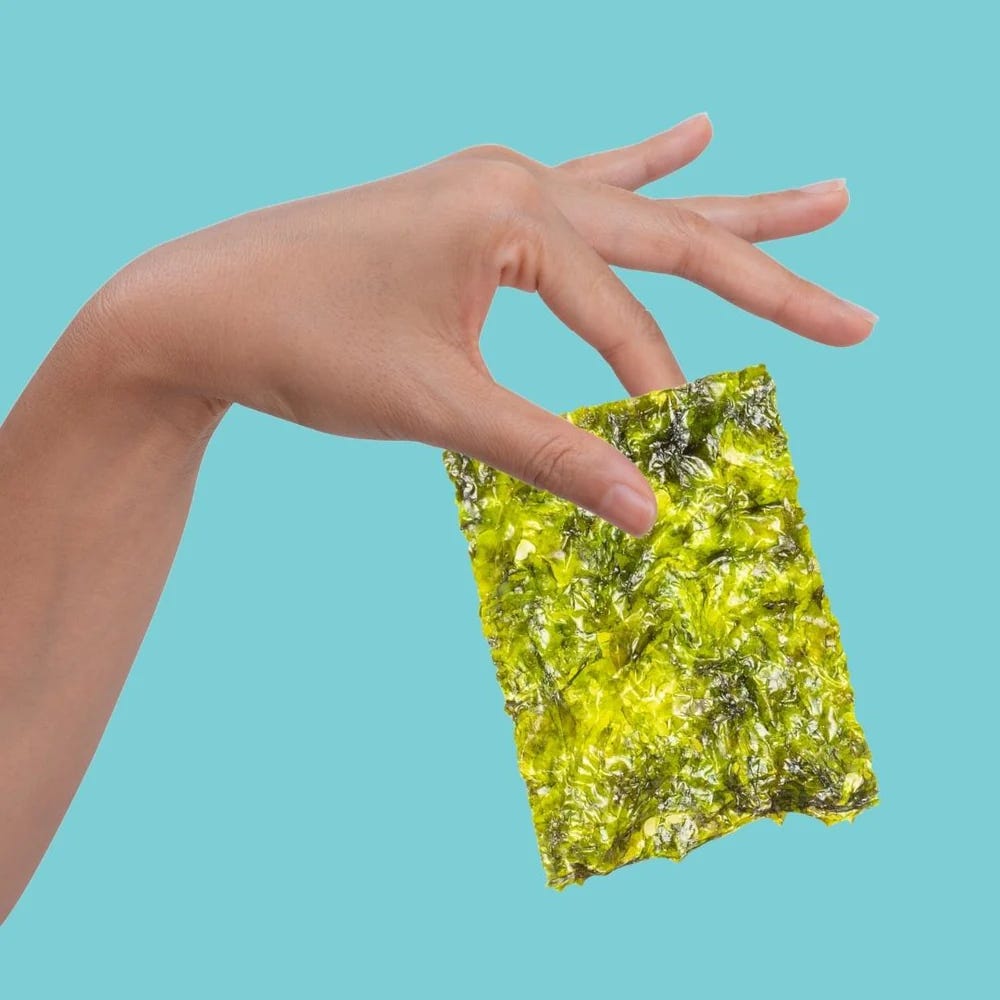
Taste is just a model based on the things we can immediately sense. The color, texture, and flavors are the same. Our iodine governor says more of that please, and so we eat it and like it. But then our governor gets confused a few hours later when there’s no iodine coming down the pipe. We’ve got a pretty established neural pathway to enjoy this snack and associate it with iodine, what should the governor do? Does it get freaked out?
I think this probably happens all the time. Some seaweed has way more iodine than others, and we don’t want to update too hard against it. So your taste doesn’t update too much, and you get lower and lower in iodine as you eat this alternative seaweed.
But eventually this should become a problem, and you will update your taste model against it, increase your governor’s drive, or displace the food to want something else where the taste model is accurate.
But importantly, you SHOULD be able to gaslight your class 2 nutrient governors for some time. Not forever, but for a bit. And this should be part of alternative protein strategy. I think the eggs example from SMTM was because of failed gaslighting, it failed on taste or the class 1 governors. The speed with which you dislike it tells you which class of governor failed.
This has large implications for alternative proteins that don’t fulfil all class 2 nutrient needs, how long can this keep going?
The origin and terror of undetectable class 3 nutrients
I think it’s likely that most nutrients are class 3, we don’t have immediate receptors for them in the mouth, and we don’t have delayed receptors for them in the rest of the body. It’s just if we don’t get enough of them we eventually become less healthy or die. We do not have governors for these nutrients.
So why do these exist? I’d say probably because in an ancestral food environment, certain nutrients are correlated. Vitamin C is correlated with fruit, and lots of other foods that we are eating and craving anyway. So it was only when we put people in weird conditions on 17th century ships with only hard tack, salt pork, and rum that we found a food environment that met the class 1 and class 2 nutrients, but managed to leave Vitamin C out. And so, scurvy. (After showing them this draft, the SMTM team told me they had written about this story before.)
I think this phenomenon probably explains partially why the Standard American Diet with its packaged foods is bad. It’s not that ultra-processing or seed oils are per-se bad, it’s just that they are likely to leave out important class 3 nutrients. It is also probably why whole-food diets tend to perform very well, it turns out that a ton of nutrients are not detectable by our various bodily sensors, or by science.
The governors can be wireheaded
So for class 1 and class 2 nutrients, we have governors for each one. And we do not have governors for class 3 nutrients.
What if we created foods that just satisfy only these really well. Well done, you have invented chips! We call this phenomenon hyperpalatibility.
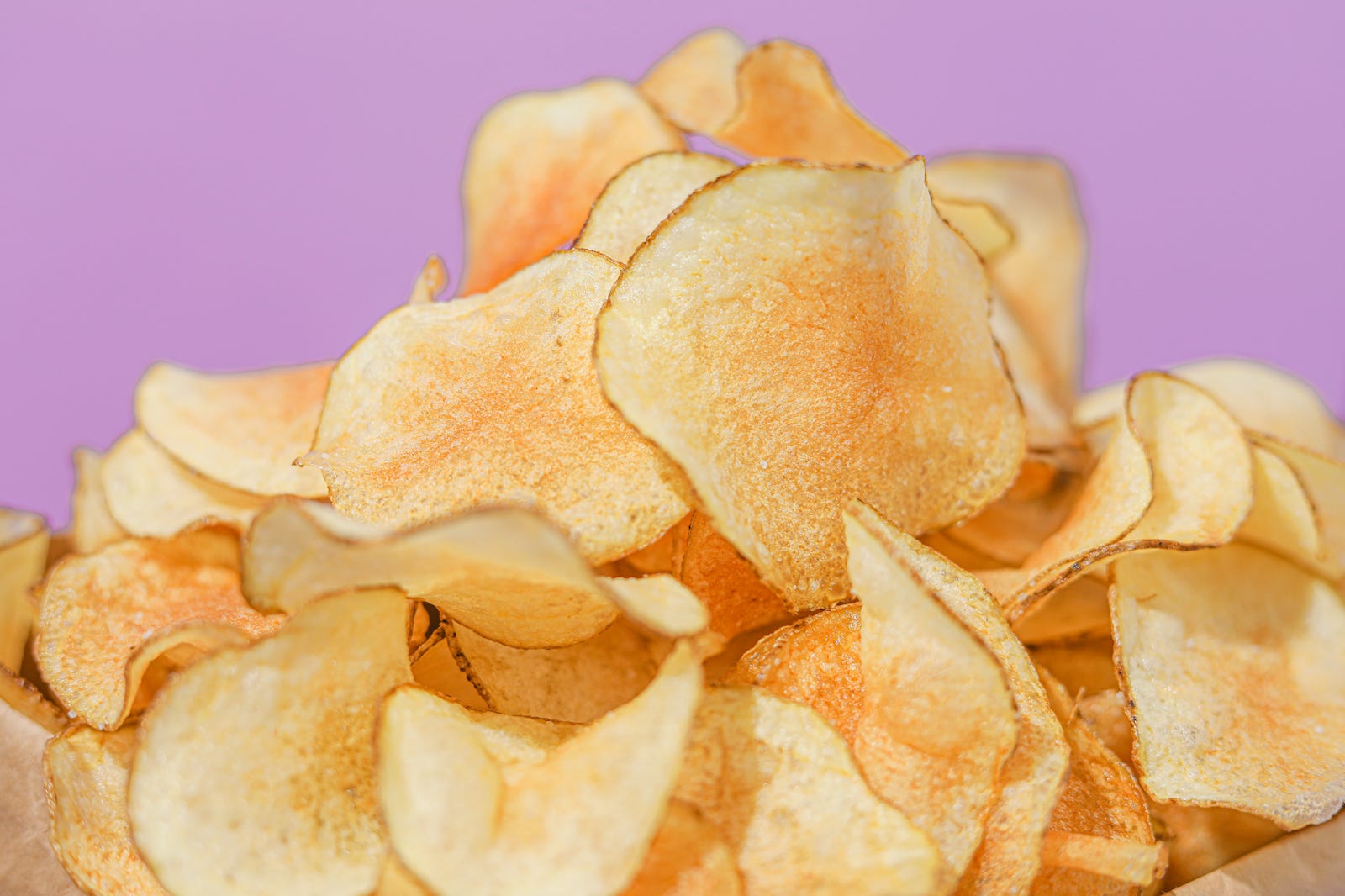
There is currently no good explanation for hyperpalitability. Why is ice cream delicious but eating sugar by the spoonful with glasses of cream not? Why are ice cream and chips both cravable even though they have very different nutrients?
With this theory, we can explain hyperpalatibility as any food that can wirehead multiple governors without pissing off other governors and hitting their upper bound. Ice cream goes for sugar and fat while satisfying textures and flavors of the taste model, and not hitting any governor too hard - sugar maxes out the sugar governor without hitting any other governors or satisfying the taste model.
Given that we can now separate and recombine nutrients from the natural word into many new forms and combinations, it makes sense that our food science has directed in ways to appease our governors. This explains adoption of hyperpalitable food in the Standard American Diet.
There are people that are resistant to the Standard American Diet and love salad. I am one of them. What the hell is going on? I think it’s because there seems to be a way to care about class 2 nutrients more than class 1 nutrients, which are harder to wirehead. Or maybe class 2 nutrient governors are easier to atrophy.
Do we find lots of people who crave taking multivitamins (besides kids wanting their sugary ones)? Mine definitely have a characteristic flavor and more iodine than a seaweed snack, but I'm oddly not interested in popping an extra one, yet I'd gladly finish a "family size" bag of chips or ten pouches of seaweed snacks if I refrained from exercising Herculean self-control. Am I a weirdo who is strangely immune to tasty multivitamins?
Interesting theories—I can honestly say that I have never before considered the influence of these three factors on my eating. I am governed by: 1) This tastes good, but too much and I’ll puff up and since tasty food is hard to resist, better not bring it into the house or down the hatch it goes. 2) This tastes gross—no thanks, even if it’s good for me. 3) This is both not too ick AND good for me, I’ll mix it in with stuff that tastes better…(Their might be a fourth category, too, of stuff that tastes good and is good for me but for some reason my body reacts badly to it—like coconut milk, so I have to avoid that, too. And some stuff is pure psychological bias, like salt… ) An interesting read. Thanks!